

RCC vs HDPE Pipes – Which Is Better for Drainage & Sewer Work?
When it comes to drainage and sewer projects, choosing the right pipe is critical. RCC vs HDPE pipes is a common comparison for builders and contractors because both types are widely used in construction. However, their strength, durability, and cost vary significantly, making it essential to select the right one for long-term performance.
Material Differences: RCC and HDPE Pipes
RCC pipes are made from reinforced cement concrete, with steel rods inside to provide extra strength. This allows them to handle heavy loads effectively.
HDPE pipes, made from high-density plastic, are lightweight and flexible. They are easy to transport and install but are best suited for lighter drainage and water supply applications.
Strength & Load Handling
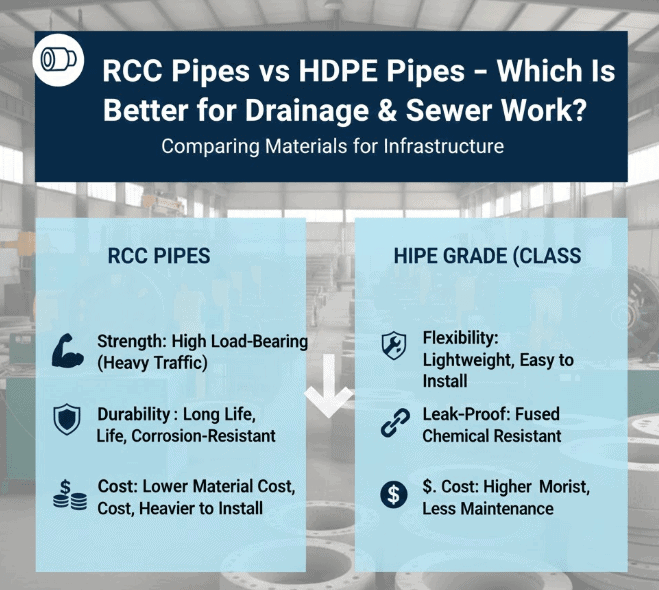
RCC pipes offer high strength and can withstand road loads, vehicle pressure, and soil weight. This makes them ideal for highways, sewer lines, and stormwater drainage systems.
In contrast, HDPE pipes are not recommended for heavy-load areas. They may bend or get damaged under continuous pressure, so they are better for low-pressure drainage or water supply.
Life Span and Durability
Properly installed RCC pipes can last 40–60 years. They resist heat, moisture, and soil pressure very well.
HDPE pipes, however, can weaken over time due to sunlight exposure, temperature changes, and chemicals, resulting in a shorter lifespan than RCC pipes.
Cost Comparison
Although HDPE pipes seem cheaper initially, repair and replacement costs can make them more expensive in the long run. RCC pipes have a slightly higher upfront cost but provide better long-term value due to durability and low maintenance.
For permanent drainage and sewer systems, RCC pipes are generally the more cost-effective choice.
Best Applications for RCC and HDPE Pipes
RCC pipes are ideal for:
Sewer lines
Stormwater drainage
Road crossings
High-load industrial areas
Municipal drainage systems
HDPE pipes work best for:
Light water supply
Temporary drainage
Low-load areas
Final Verdict
Overall, RCC vs HDPE pipes comparison shows that RCC pipes provide better strength, longer life, and lower maintenance costs. While HDPE pipes may be useful for light tasks, RCC pipes are the smarter and safer choice for permanent drainage, sewer lines, and road projects.
To Get the Latest Updated Rate Please contact us on:
Mail Us:Sales@balajispunpipe.com|Contact Number:+919992906006
Visit Our Website on www.balajispunpipe.com
Or You can Follow us on LinkedIn